Characters:
Emmanuel, Duke of Savoy
Count Albrecht
Bathilde, Count Albrecht’s fiancée
Wilfred, Count Albrecht’s squire
Head of the hunt
Giselle, a peasant girl
Hans, a gamekeeper
Berthe, Giselle’s mother
The groom, a peasant
The bride, a peasant girl
Myrtha, the Queen of Wilis
Zulma, Myrtha’s confidante
Monna, Myrtha’s confidante
The Duke’s retinue, hunters, peasants, Wilis, Bathilde’s retinue, children
There is a legend about ghostly female dancers who are known by the name of Willis. The Willis are brides who died before being married. The poor young creatures cannot lie calmly in their graves; in their dead hearts and feet the old passion for dancing, which they could not gratify in their lives, still burns. So at midnight they rise, assemble in troops on the highways, and woe to the young man who meets them! He must dance with them, they surround him in unbridled madness, and he must dance with them without rest or repose till he falls dead. In their bridal dresses crowns of flowers, and ribbons flying from their heads, flashing rings on their fingers, the Willis dance in the moonshine, as do the elves. Their faces, though snow-white, are young and fair; they laugh so strangely sweet, they nod with such seductive secrecy, so promisingly — these dead Bacchantes are irresistible. For when people saw beautiful brides die they could not believe that youth and bloom, in all their brilliancy, could pass abruptly into black nothingness, so that the faith arose easily enough that the bride continued to seek after death the joys of which she had been deprived.[1]
Heinrich Heine
“Elementary Spirits”
No magic can resist love.
Love is the strongest of sorceries,
no other magic prevails against it.[2]
Heinrich Heine
“Elementary Spirits”
Act One
In a small and picturesque mountain village at the foot of the Alps, live a peasant woman, the widow Berthe, and her daughter Giselle, the most beautiful and charming of her friends.
Early in the morning, trying to remain unnoticed and completely wrapped in a black cloak, accompanied by his squire, Wilfred, Count Albrecht arrives at the village. He loves Giselle and eagerly awaits their meeting. Albrecht gives his squire a key and orders him to unlock the hunting lodge the Count has purchased in the village so he can change into peasant clothes.
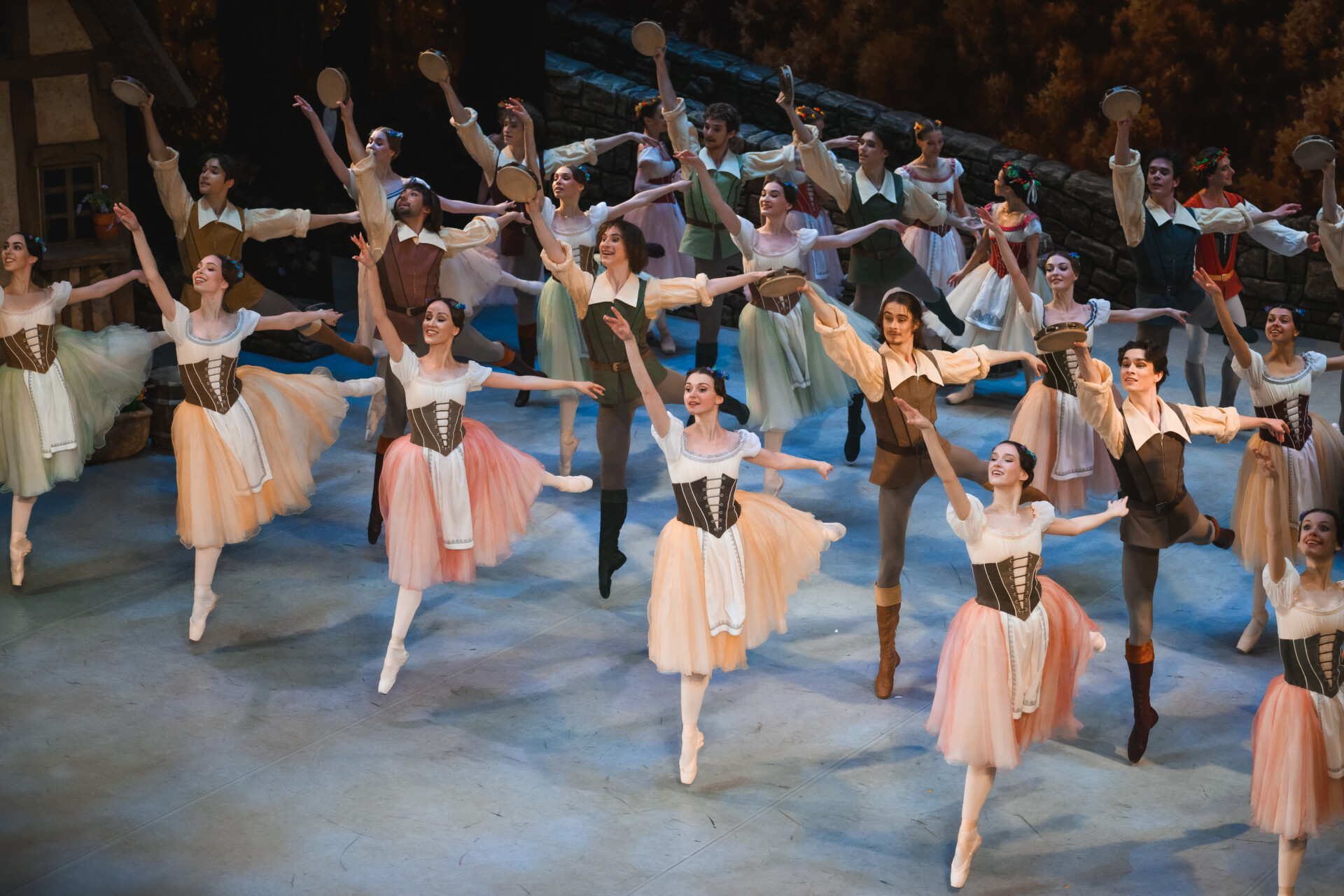
The day begins. Peasants, passing by Berthe’s cottage, greet her and set off to harvest the grapes, beckoned by the hills covered with red, saffron vines baked and sugared in the autumn sun. Everyone is joyfully excited and anticipating the festivities, for today is the last day of the harvest, when a peasant wedding is scheduled. Berthe is also greeted by the gamekeeper, Hans, who has appeared after the peasants. He, too, loves Giselle and therefore shows Berthe respect and every care.
Albrecht emerges from his cottage, now disguised as a peasant. Wilfred begs the Count to abandon his secret intentions, but he orders to be left alone. Wilfred still hesitates, but at his master’s command, he bows respectfully and leaves. Alone, Albrecht knocks on Berthe’s door and hides around the corner. Giselle emerges and, seeing no one, begins to dance joyfully, feeling happy. Albrecht appears from around the corner. The girl, embarrassed, runs toward the house, but Albrecht stops her, respectfully takes her hand, and, whispering tender words, begins to dance with her. Giselle, not entirely trusting Albrecht’s words, refuses to listen to his confession. The young couple are reading a daisy; Giselle’s last petal breaks off with the word “does not love,” while Albrecht’s says “loves.” Continuing to dance together after the reading, they don’t notice Hans approaching them. He claims that he loves Giselle more than life itself and asks her not to believe Albrecht, but she denies his love, and Albrecht sends him away.
The peasants return from the vineyards for their rest and invite Giselle to join them in the grape harvest. But Giselle, who loves dancing to the point of madness, restrains them and suggests they have fun instead of going to work. At first, she dances alone, but her cheerfulness and playfulness captivate the others, and thanks to Giselle’s example, the dancing soon becomes universal. Albrecht becomes increasingly enchanted by the peasant girl’s natural grace and charm. Berthe, emerging from the house, stops dancing:
“You’ll dance forever,” she says to Giselle, “evening… morning… What passion! Instead of working and running the household… And yet you have a bad heart, and you can’t move much.”
“It’s my only joy,” Giselle replies. “Dancing and him,” she adds, pointing to Albrecht, “that’s my only happiness.”
“I’m sure that if that little fool died,” says Berthe, “she would become a Wilis and dance even after death, like all girls who love dancing!”
And Berthe tells how young girls, who loved dancing in life, rise from their graves and dance in the moonlight. The peasants’ horror is extreme. Everyone disperses.
Hunting horns are heard in the distance. Albrecht is alarmed by the sounds. Wilfred comes running and warns of an approaching hunt, led by the Duke of Savoy. His daughter Bathilde, Count Albrecht’s fiancée, is with him. Squire offers the Count a cloak, but he decides to stay for the village festival and disappears into the valley. Hans overhears their conversation. He is astonished to see such a nobleman as Wilfred so respectfully treat a simple peasant, his rival. A suspicion creeps in: he wants at all costs to uncover his rival’s secret and discover his true identity. Making sure no one is watching, he stealthily enters the hunting lodge… At that moment, the sound of hunting horns approaches, and richly dressed ladies and gentlemen, falconers, crossbowmen, and a large retinue appear. Among them is the Duke of Savoy, Emmanuel, and his daughter Bathilde. The day’s heat weighs on them, and they seek a comfortable place to rest. Berthe and Giselle invite the noblemen to rest in their home. Bathilde admires Giselle’s modesty and beauty and gives her a precious necklace as a keepsake. Hans, watching from the hunting lodge, overhears the Duke’s command to his retinue to assemble at the first sound of his horn. The Duke and his daughter retreat to Berthe’s hut.
Hans, having waited until the hunt has departed, emerges from the hunting lodge, sword in hand; he has finally discovered the identity of his rival — a noble gentleman. He is now certain that he is a trickster in disguise, and he wants to take revenge and shame him in front of Giselle and the entire village. The gamekeeper approaches the horn hanging on the wall of Berthe’s house and sees that the coat of arms on the horn and the sword are the same! Albrecht had indeed given this magnificent horn to his future father-in-law, who was visiting his castle at the time with his daughter. Hans hides Albrecht’s sword in the bushes while waiting for all the peasants to gather for the feast.
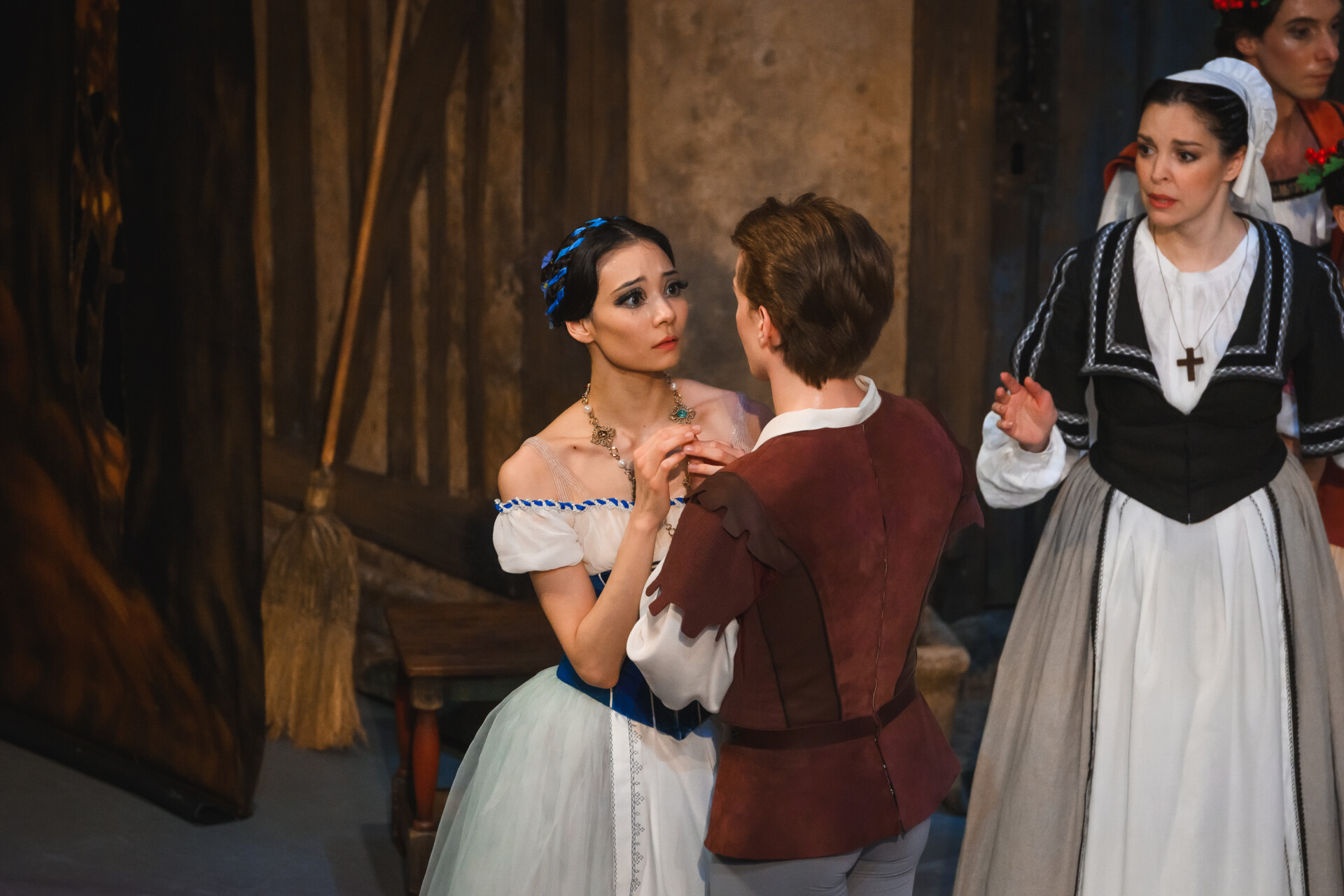
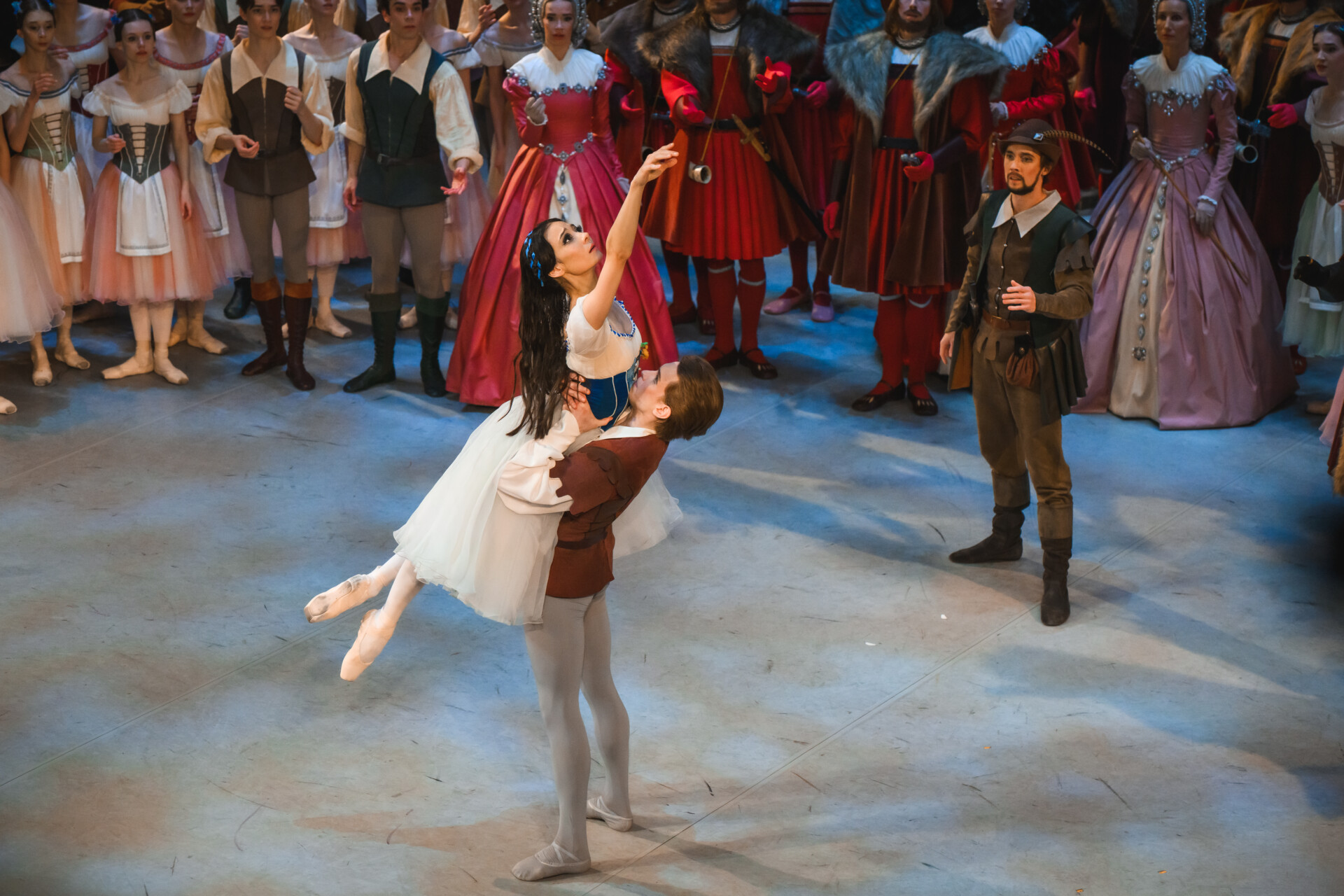
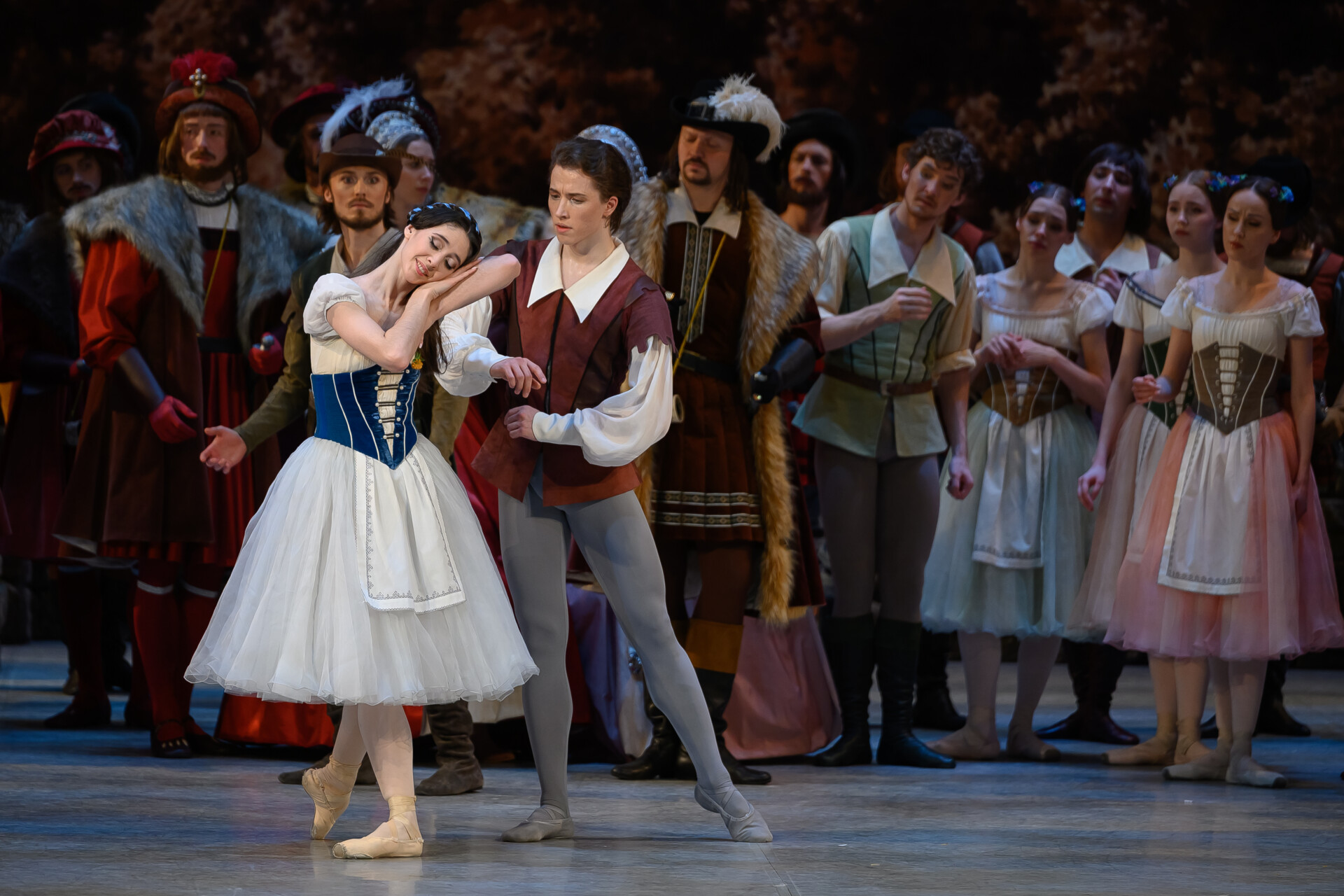
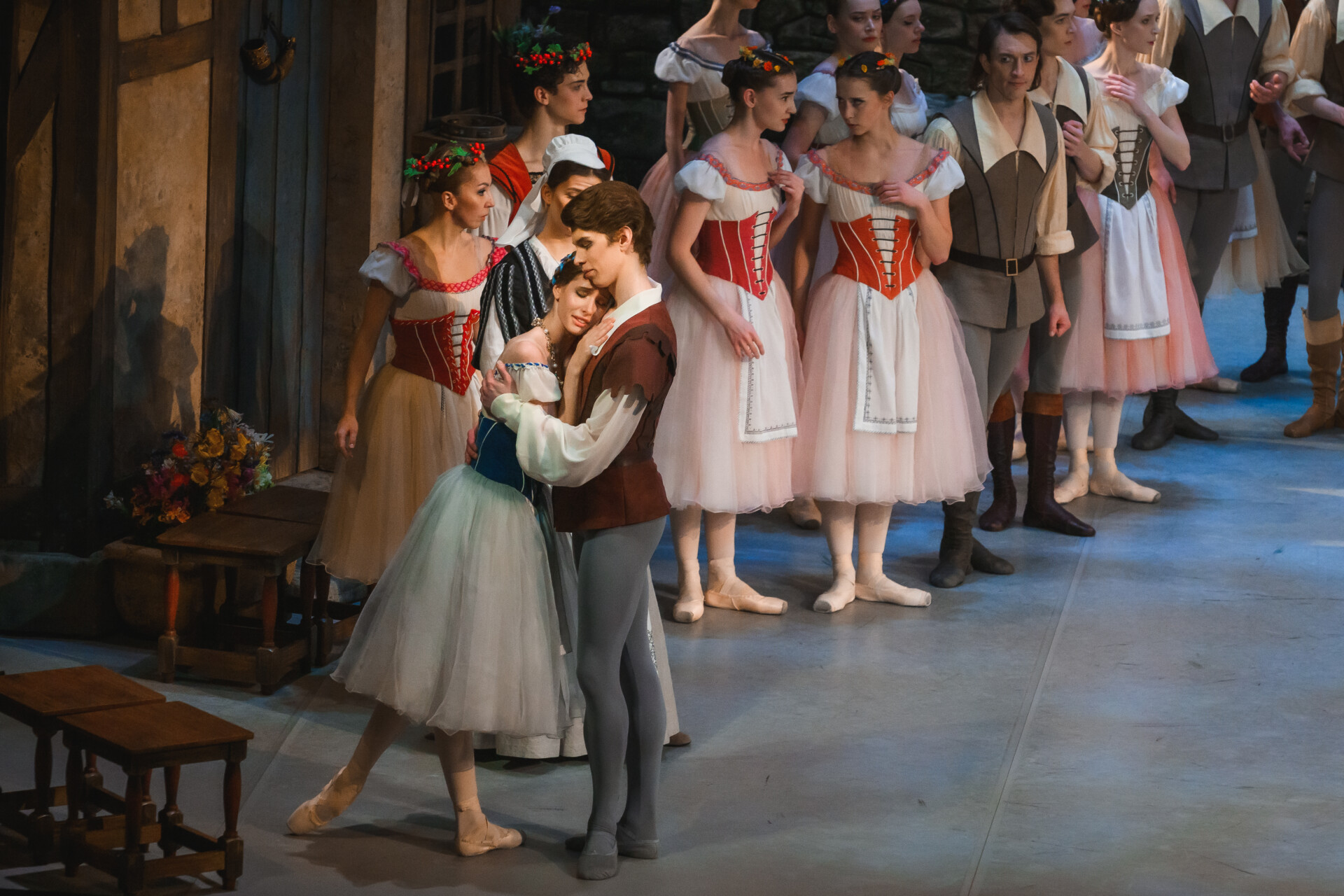
Joyful music is heard. The procession begins. The grape harvest is over. A cart, decorated with vine branches and flowers, carrying the happy bride and groom, slowly approaches. The peasants joyfully celebrate the end of the grape harvest and the wedding of their fellow villagers. Giselle can now indulge her passion for dancing. She draws Albrecht into the midst of the crowd of grape pickers, surrounded by all the villagers: how she would love to stand in the cart with Albrecht, just like these happy newlyweds! At the end of the dance, Albrecht wants to kiss Giselle, but Hans suddenly appears, rushes into the crowd, and accuses the Count of deception: he saw his rich weapons and dress in the hunting lodge. Albrecht pretends not to understand what he is talking about. But after the forester hands the Count his weapons with a sarcastic bow, Albrecht grabs his sword, and only the squire manages to stop his master. Hans blows the hunting horn, summoning everyone. The guests appear, surprised to see Albrecht in peasant attire. The Duke’s retinue pays him respect, and Giselle realizes that Albrecht is a nobleman and his declarations of love are a mere charade. Stunned by this blow, she runs to her mother and, sobbing, falls into her arms. At that moment, Bathilde emerges from Giselle’s hut, accompanied by her lady-in-waiting. With tender concern, she asks Giselle the reason for her agitation. Giselle, instead of answering, points to the confused Albrecht.
“What do I see?” says Bathilde. “The Count in this attire… But he is the one I am destined to marry… He is my fiancé!”
Giselle heard everything, understood everything! She tears off the necklace given to her by Albrecht’s fiancée. Both her friends and guests express their sympathy to Giselle. Albrecht wants to explain something to the girl, but her mind is clouded. Grabbing a sword lying on the ground, Giselle tries to pick it up and stab herself. In despair, she struggles to speak, to remember, but consciousness deserts her. She falls dead. Albrecht, maddened by despair and love, is torn from Giselle’s body with difficulty.
Peasants, nobles, and the entire hunt surround lifeless Giselle, completing this sad scene.
Act Two
Scene One
Miserable and bleak, Count Albrecht is in his castle chambers. He can’t believe what happened that night in the village, at the village festival. His heart pounds in his temples, and Albrecht recalls every detail of that terrible event over and over again. The hunting horn sounds obsessively in the poor count’s head. He is filled with bitter remorse and doesn’t know what to do now. Squire comes running and warns his master that Bathilde and a small retinue are heading towards his chambers. Albrecht begs him to prevent this visit, but Bathilde is already at the threshold. She has come to reassure her fiancé, to tell him that she still loves him and forgives him for the criminal recklessness that led to the tragedy. Albrecht is unable to accept such generosity. Impulsively, he grabs his cloak and runs to the cemetery to repent at the grave of poor Giselle.
Scene Two
A rural cemetery. Hans sits motionless at Giselle’s grave, his gaze icy, like a statue. Suddenly, as if awakening from a deep sleep, the forester shuddered; this was the grave of his beloved Giselle! It was because of his jealousy and selfish envy of the happiness of others that she had perished! Only now did he realize the full weight of his grief. At that moment, the clock in the cemetery bell tower strikes midnight: the hour at which the Wilis emerge from their graves. Hans listens to the chimes in horror and, hearing mysterious sounds and rustlings, seeing flickering lights, flees in fear.
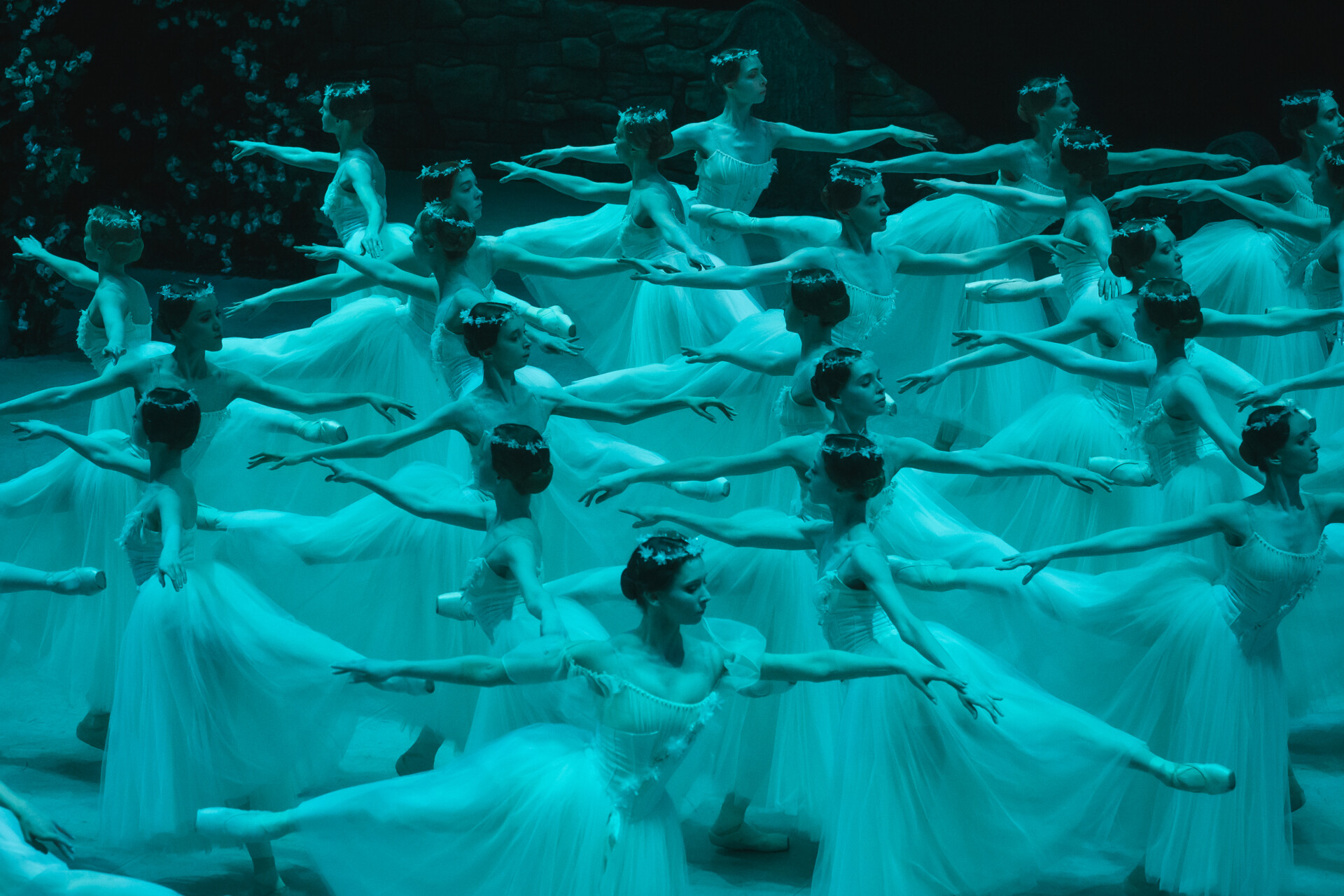
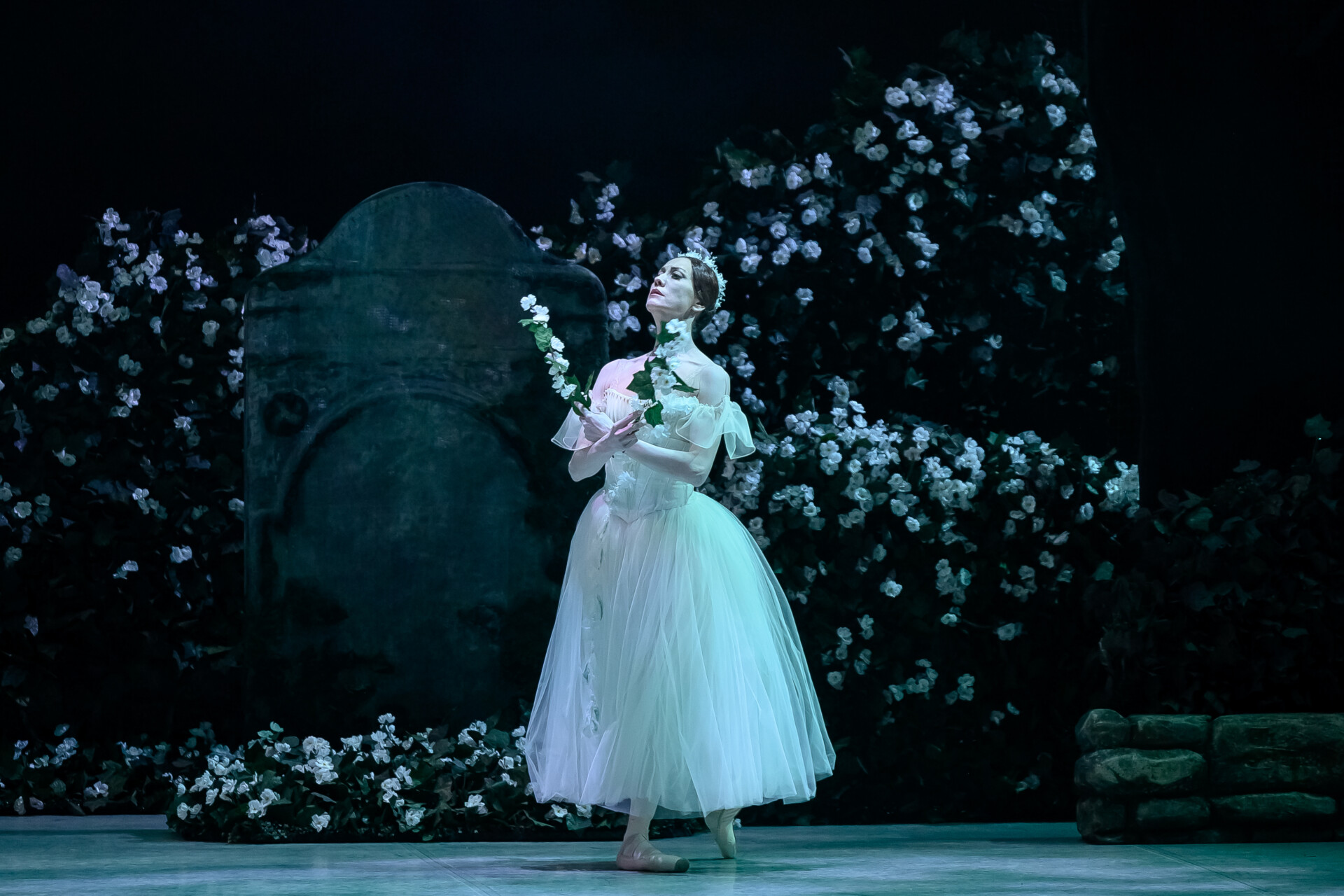
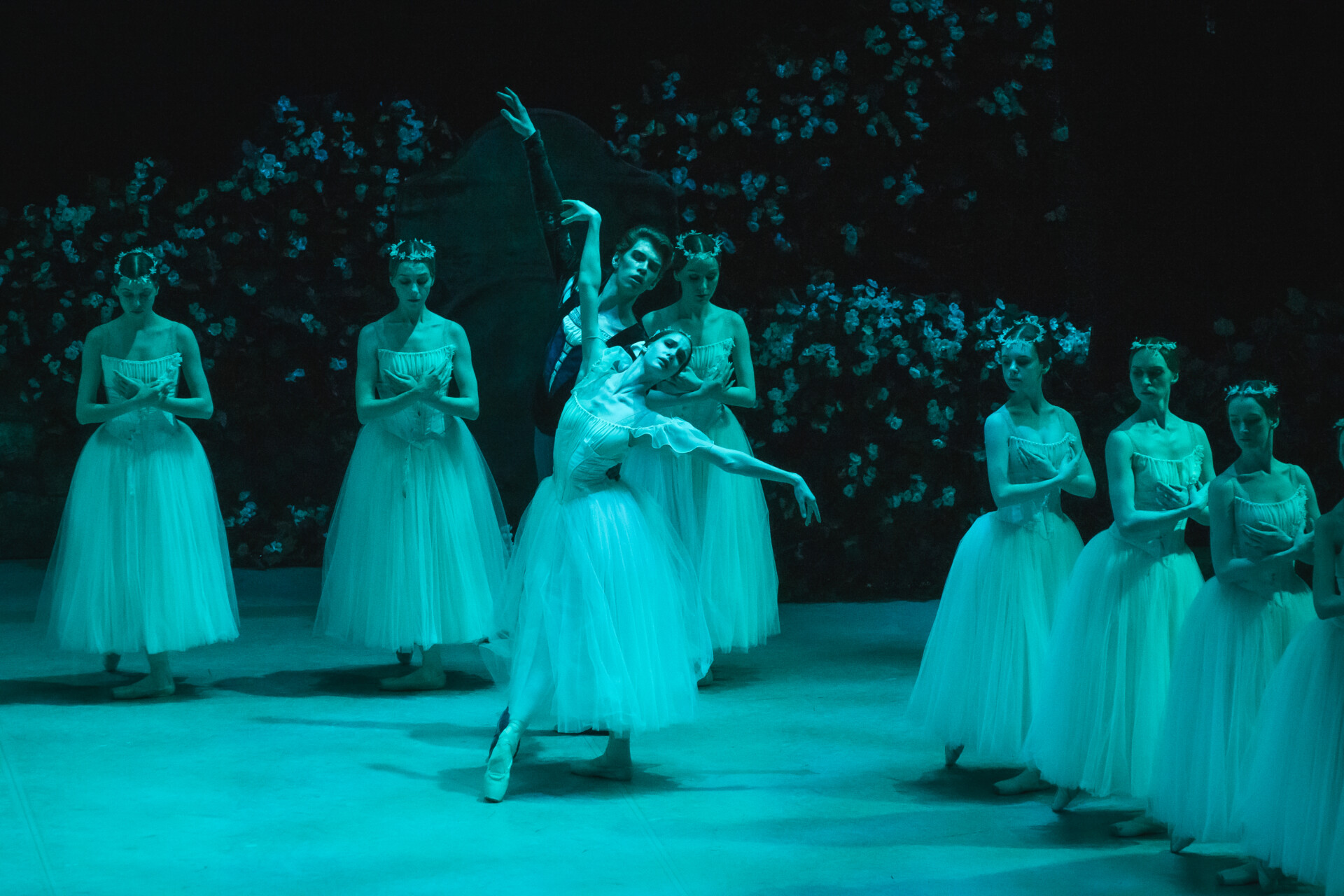
The shadow of Myrtha, the queen of the Wilis, rises from the earth. She brings with her a mysterious light that suddenly illuminates the entire cemetery. Light, ghostly, and pale, gliding silently across the earth and flying through the air, she surveys her domain. At Myrtha’s sign, a multitude of Wilis appear — all those young girls who loved pleasure and dancing on earth but never had the chance to savour them in life. In their unearthly, graceful transformation, they indulge their former passion with even greater fervor. Soon Myrtha stops the dancing, wanting to introduce the new Wilis to her subjects. A bright ray of moonlight falls upon Giselle’s grave. Giselle emerges from the grave and approaches Myrtha. At her command, she dances, transforming into a Wilis, or rather, flies through the air, like her graceful sisters. Distant footsteps are heard. The Wilis disappear into the bushes.
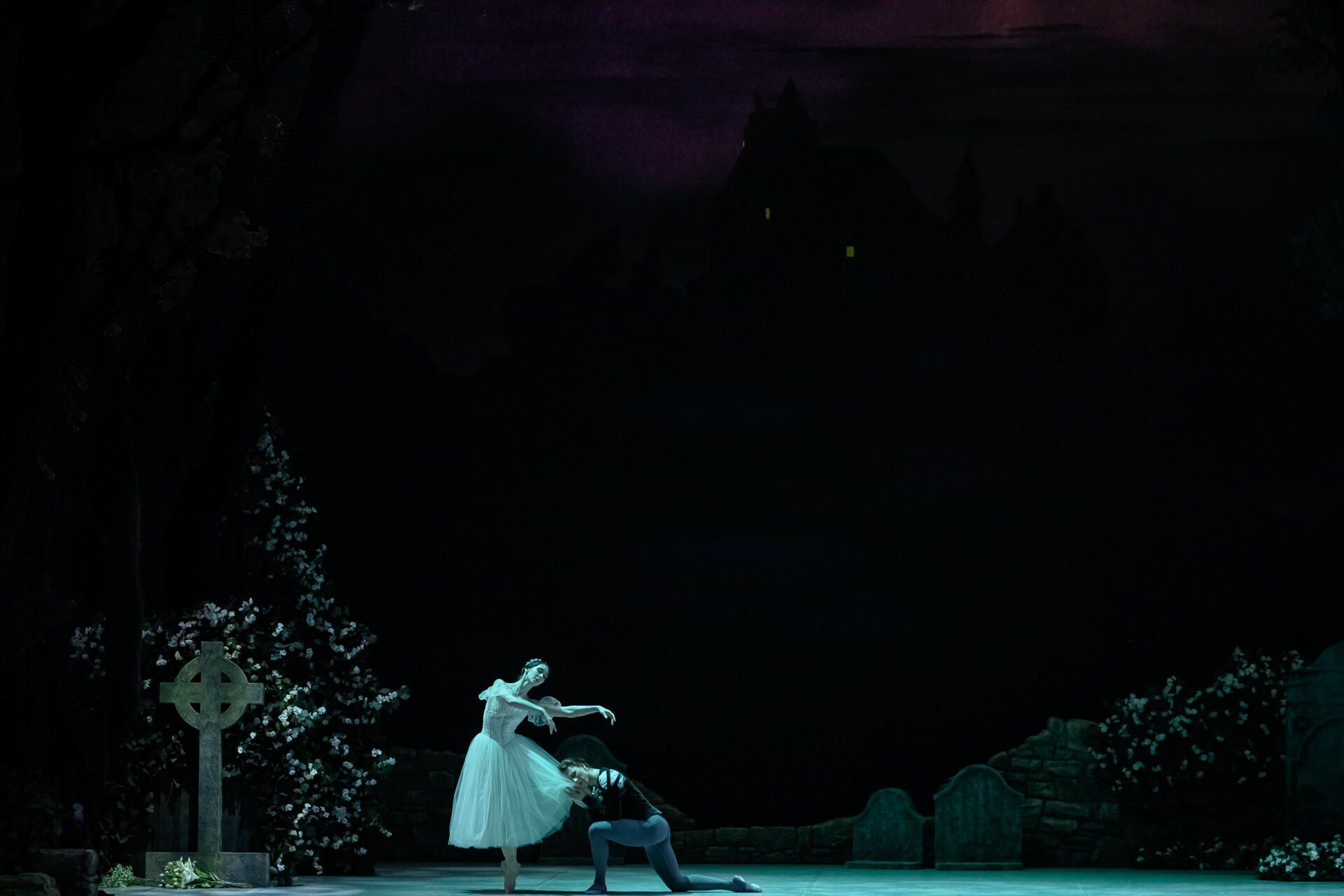
Albrecht appears, pale and sad. He wanders slowly, unable to see anything in front of him, his heart either frozen or vanished from his chest with grief. Upon finding Giselle’s grave, the Count surrenders entirely to his sorrow and sheds tears of remorse. Wilfred arrives, begging Albrecht to leave this pernicious place. The faithful servant recounted how the Wilis had tried to pursue him, how he had barely escaped, and that if his master remained here, he would surely perish. Albrecht sternly orders him to leave. Wilfred, terrified, obeys and flees. Albrecht kneels before the grave and folds his hands in an imploring gesture. Giselle, drawn by this silent grief, full of love, rushes to her beloved: she tenderly touches him, allows him to embrace her, then, quietly slipping between his arms, disappears among the bushes, leaving Albrecht to embrace only the tombstone. Suddenly, Giselle reappears and insistently calls Albrecht to follow her, as if wanting to lead him away from this place. Albrecht follows her.
At that very moment, Hans runs in, pursued by the Wilis. Pale, trembling, almost dead with fear, he begs for mercy, but Myrtha is adamant, commanding him to dance and dance! Hans dances against his will, the Wilis now pressing him into a circle, whirling him around in their dance until he’s dizzy, then passing him from one Wilis to another. The unfortunate forester feels his knees buckle beneath him, his eyes closing, he can no longer see, yet he dances with even greater energy. Finally, Myrtha commands the Wilis to use the magic of their dance to drive the gamekeeper to the edge of the abyss, and two Wilis push him over.
Before they can finish Hans, the Wilis find Albrecht, and he appears before their queen. Albrecht begs for salvation, but Myrtha is adamant: he must die. Giselle runs in and, eager to save and protect her Albrecht, leads him away from Myrtha to her tombstone: she points to it as his only defense, his only safety! At that moment, Myrtha attempts to touch Giselle with her magical branch, to deprive her of the power to protect her beloved, but the branch breaks in its mistress’s hands. Then Myrtha commands them to dance. Near her tombstone, Giselle dances with Albrecht for the last time. The two lovers begin a swift, airy, and frantic dance, joined by the other Wilis. A deadly fatigue overcomes Albrecht. It is clear he is still struggling, but his strength is beginning to fail. Giselle approaches her mistress and, her eyes filled with tears, again and again begs for mercy for her beloved. A few more minutes and Albrecht would have perished from fatigue and exhaustion, but at that moment the clock on the tower strikes, announcing the end of the night, and with it the Wilis vanish, losing their power over people and their destinies. The pre-dawn darkness engulfs their shadows.
Giselle is revived by hope. Submitting, like her light sisters, to the influence of the day, she quietly falls into the weakening arms of Albrecht. The repentant Count begs her not to leave him, but Giselle says she must resign herself to her fate and leave him forever. Her only will, her only request, the request of one who can no longer love in this world: that he be happy and give his love and fidelity to that gentle young girl, Bathilde, who was so kind to Giselle and so selflessly loves Albrecht. Extending her arms over Albrecht one last time, Giselle approaches her grave and finally disappears within, slipping from the sobbing Albrecht’s arms.
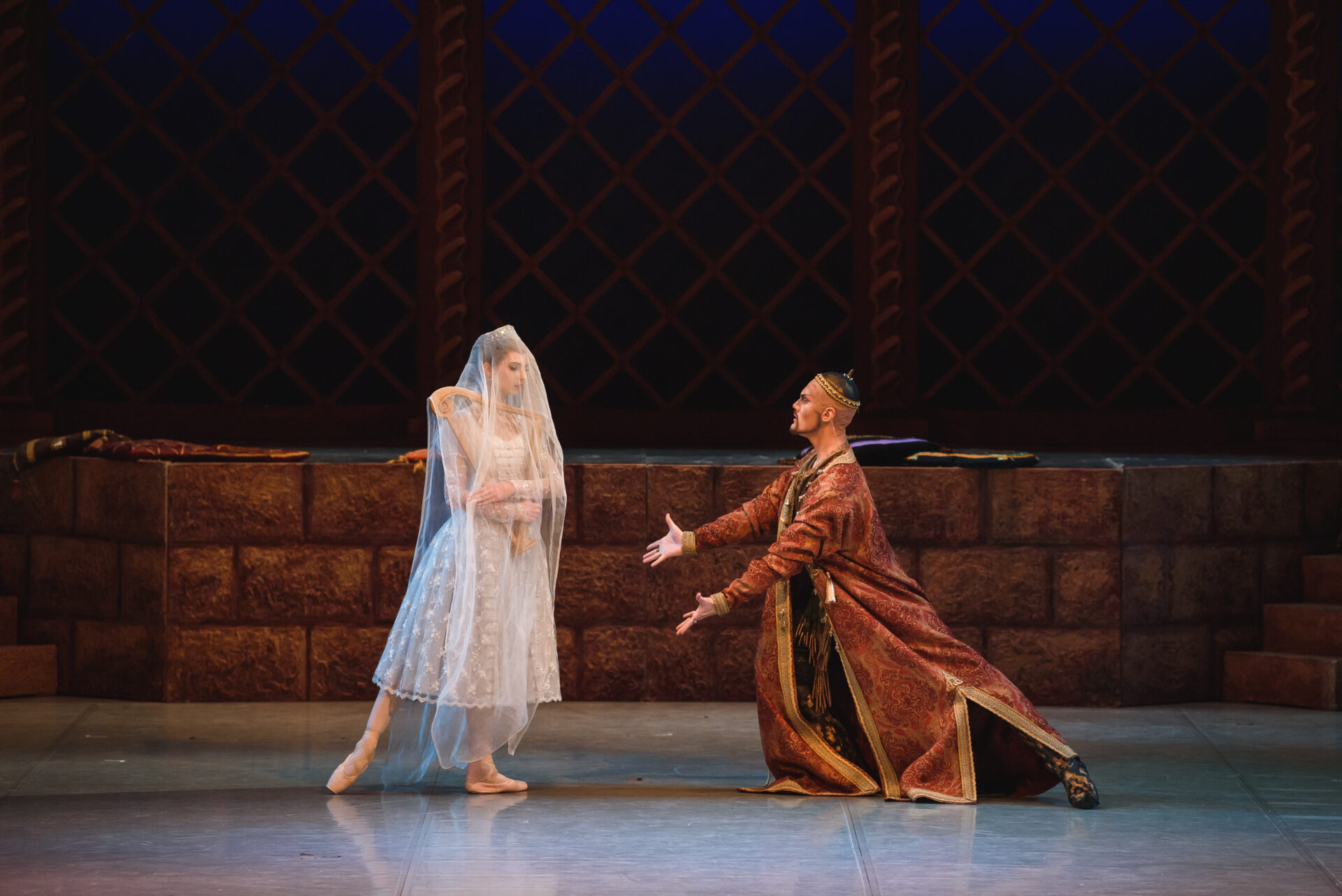
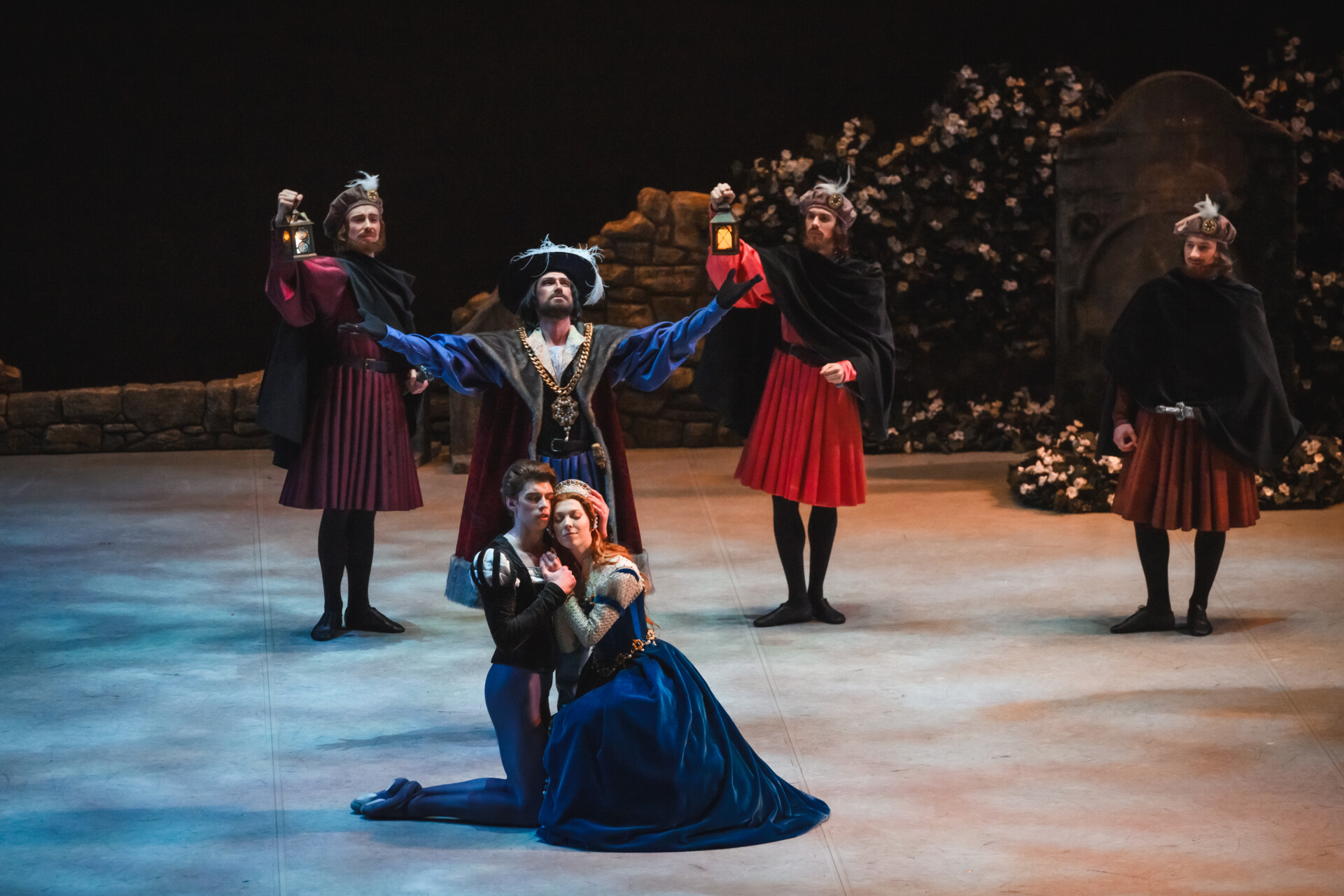
Wilfred arrives. The faithful squire leads the Duke, Bathilde, and a large retinue gathered from the castle. Bathilde can’t believe her eyes — Albrecht is alive! She quietly approaches Albrecht and tenderly rests her head on his shoulder. But her beloved pays no attention, continuing to sit in a lethargic stupor. As Bathilde, in the most sorrowful and meek despair, begins to leave, Albrecht, remembering Giselle’s will, extends his hand to his bride and, with tears of remorse, gratitude, and love, falls to his knees before her. Wilfred bows before the tombstone of Giselle, who saved his master from certain death with the power of her love.
[1] Цит. по: The Works of Heinrich Heine. Vol. 6; tr. from the German by Charles Godfrey Leland (Hans Breitmann). London: W. Heinemann, 1892. Pp. 138-139.
[2] Ibid. P. 153.